Tohoku team speeds qubit readout in 2D materials
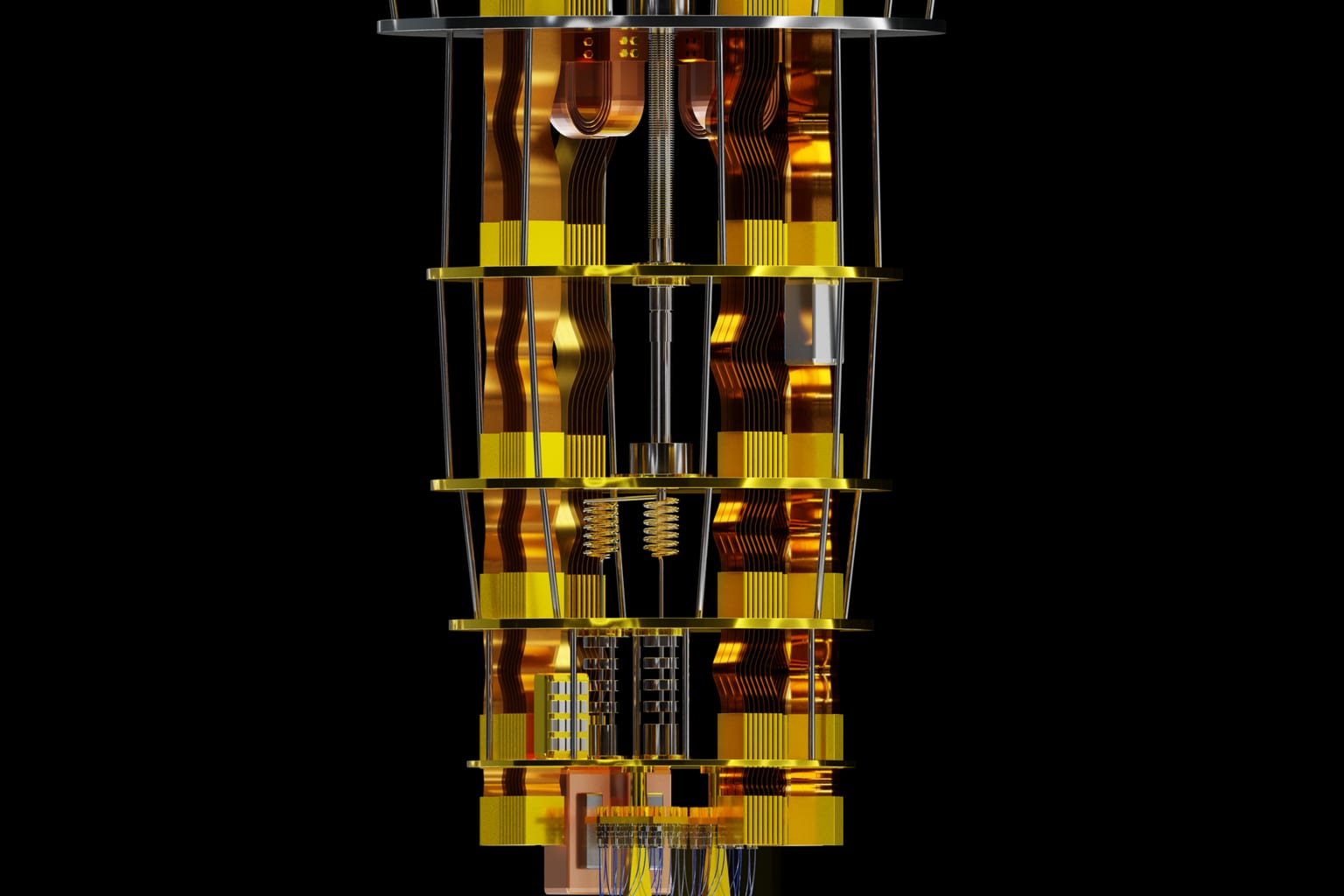
Every qubit has to be tuned before it can compute, and tuning means measuring the same device again and again. For quantum devices built from two-dimensional materials such as bilayer graphene, that measurement has been the slow step. A team from Tohoku University and the National Institute for Materials Science (NIMS) has now published a method that reads these devices at high speed and with high sensitivity, in a study in the journal npj 2D Materials and Applications.
The obstacle was electrical resistance. These materials resist the current so strongly that fast, high-frequency measurements did not match the device: the circuit and the device did not share the same impedance, the electrical measure of how a circuit opposes an alternating signal. The researchers integrated a variable capacitor made from strontium titanate (SrTiO₃) into a high-frequency resonant circuit, and they tuned it until the impedance matched. The result, in the team's words, achieved “near-perfect impedance matching” with highly resistive 2D-material devices.
At that match, the team captured Coulomb oscillations, the signals of electrons entering and leaving a quantum dot, a tiny confined region that holds electrons, one at a time. Oscillations that were undetectable under mismatched conditions became clearly resolved once the circuit was matched. The system also stays stable under a perpendicular magnetic field, a condition the paper calls mandatory for operating spin-valley qubits. Associate professor Tomohiro Otsuka of Tohoku University's Advanced Institute for Materials Research (WPI-AIMR) says the method “unlocks charge detection sensitivity that equals or surpasses conventional quantum dot sensors.”
Researchers building qubits from 2D materials gain first, because a faster readout means more measurement cycles in the same time. Otsuka argues that qubit development requires “massive amounts of repetitive statistical measurements,” so a fast readout technique accelerates the whole research and development cycle. The study reports no figure for how much faster the readout is than earlier methods, and it gives no date for use beyond the laboratory. The work is a measurement step, not yet a computer, and it remains a foundation on which further qubit research depends.
Sources — read the originals(Paris time)
Read next
Comments
Loading the thread…
Sign in to leave a comment. Sign in