Zwitterions lift perovskite solar cell efficiency
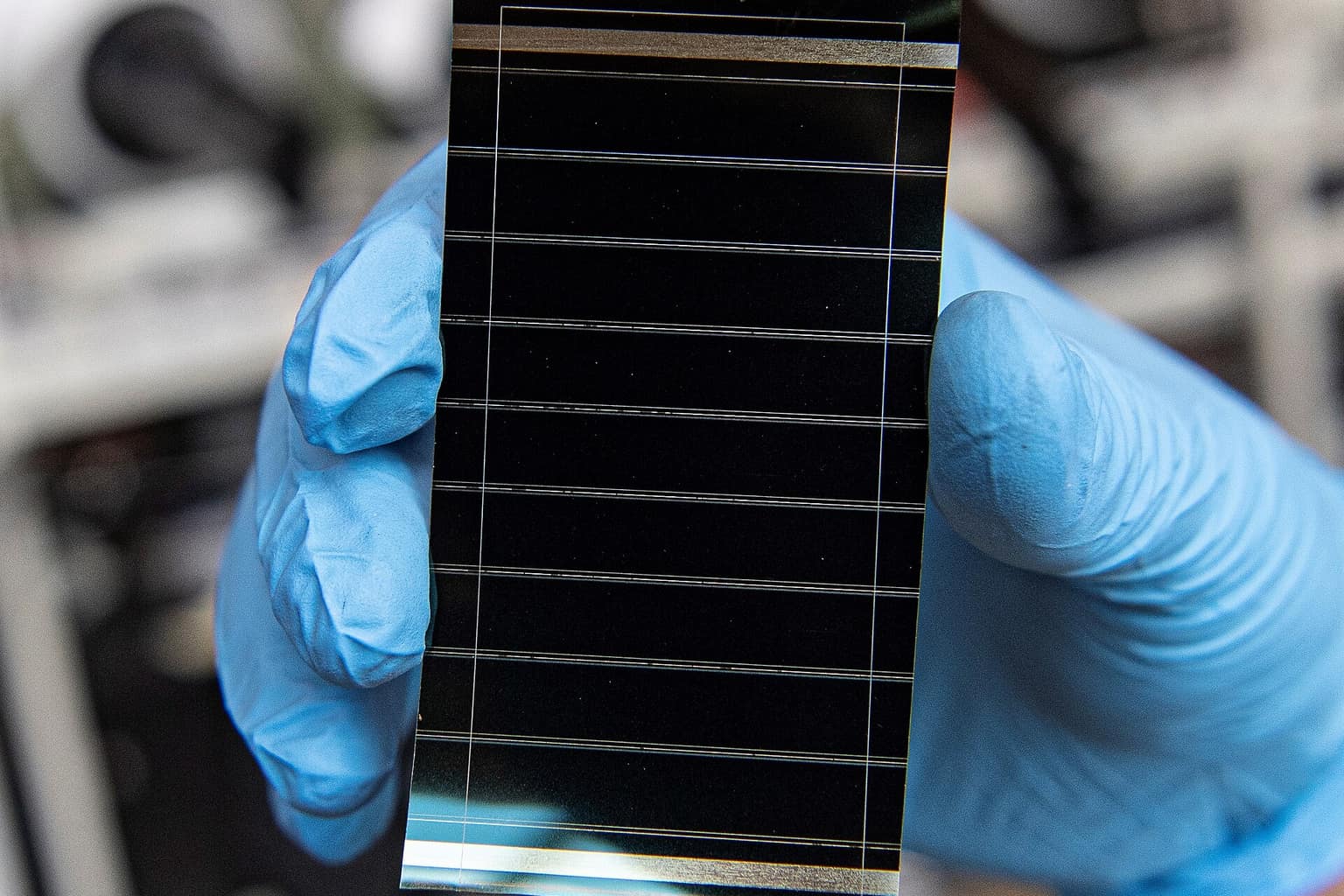
Picture a molecule with a positive end and a negative end, neutral overall, sitting inside a layer thinner than a human hair. That is the zwitterion, and in perovskite solar cells it is now being asked to do several jobs at once. The perovskite layer is the part that absorbs light and turns it into current, and it already reaches 23.79% efficiency in some laboratory devices, according to the studies cited in the review.
The problem is imperfection. Tiny defects in the crystal, such as undercoordinated lead ions and halide vacancies, trap charges before they can leave as current. Conventional passivators plug those defects, but usually with one mechanism. The researchers from Zhengzhou University say the dual charge of a zwitterion gives it a wider reach: depending on its structure and position in the device, it can passivate defects, regulate crystallization and adjust energy levels in one molecular unit. Betaine-type zwitterions have been studied most, while amino-acid-based compounds have also shown promising results.
At the interfaces, the picture is similar. Where the perovskite meets the electron transport layer (ETL), which carries electrons out of the cell, zwitterions can act on defects on both sides and reduce the barrier electrons must cross. At the hole transport layer (HTL), which carries the positive charges, they can improve extraction and limit surface recombination. In one study, a zwitterionic polymer interlayer at the electrode lifted cell efficiency from 17.31% to 19.16%, and the review also describes a molecule that captures silver and iodide ions, slowing the corrosion of silver contacts.
For manufacturers, the practical benefit would be a single additive that improves efficiency and long-term stability at once, instead of stacking several specialized treatments. One L-tryptophan device kept stable performance for more than 1,600 hours, a figure that matters for panels expected to last decades. But the review does not assemble these results into a common test, and the results come from laboratory devices, not from modules in the field. A zwitterion that works in one cell architecture may behave differently in another.
The next step, according to the authors, is a shared database linking molecular descriptors, processing parameters and device performance, which could train supervised learning models to predict the best candidate for each functional layer, and generative models to propose structures beyond those already tested. If that database materializes, the search for better solar cells could move from trial and error toward targeted design.
Sources — read the originals(Paris time)
Read next
Comments
Loading the thread…
Sign in to leave a comment. Sign in