Tencent's Hyra 2.0 agent builds its own research tools
Hyra 2.0 is built to produce reusable research tools, not only to solve single problems, Tencent says.
57 timesFaster than ProteinMPNN on protein design, per Tencent's own tests
Models, agents, applications: artificial intelligence put to work on real problems.
Here, artificial intelligence is judged on the evidence: what it does, for whom, at what cost. The section follows models and their measurable progress, agents doing real work, and above all deployments — a hospital screening more patients, a power grid better balanced, a public service answering faster. AI-as-spectacle, productless funding rounds and prophecy get no space.
We favour documented use cases with the numbers attached: how many examinations, what error rate, what savings. Non-Western players — Chinese, Indian, Emirati labs — are covered on the same footing as American ones, because much of the real deployment happens there. Every article cites its sources and separates the prototype from the service in production.
Hyra 2.0 is built to produce reusable research tools, not only to solve single problems, Tencent says.
57 timesFaster than ProteinMPNN on protein design, per Tencent's own tests

Seoul National University's RISE trains one AI on walking and object-handling data recorded separately.
50.0%average task success rate on a real robot, vs 30.0% for the baseline (lab tests)

A KAIST team's CluSTER groups training data by its learning effect and spreads it across GPUs.
69.6%Shorter fine-tuning time in KAIST experiments, with nearly unchanged performance

NTU researchers have developed a self-driving car that keeps learning after deployment, drawing lessons from every correction a driver makes.
about one-tenth“Ethical risk” (a combined measure of collision probability and harm severity) fell to about a tenth of its initial level after only a few rounds of human guidance, in tests on a real track

Agents find missing fixes, adapt patches and run tests; engineers review them and submit them to maintainers.
149distinct CVEs fixed in stable Linux kernel releases by Oct. 29, per the project

In Barnet, Camden and Dorset trials, officers' average time on householder assessments fell by 58%.
58%Cut in officer assessment time per householder application, in pilot tests (up to)

Large language models let AI agents read and use websites without the special tags Berners-Lee's 2001 vision required.

Daily AI token calls in China topped 175 trillion by June 2026, more than 1,000 times the start of 2024.
more than 175 trillionDaily AI token calls in China, June 2026, over 1,000 times the start of 2024

DeepSeek's experimental “super agent” is built to coordinate several AI agents with less human supervision.
just under 16 minutesper task in DeepSeek's tests, vs more than 29 with a conventional approach (experimental)

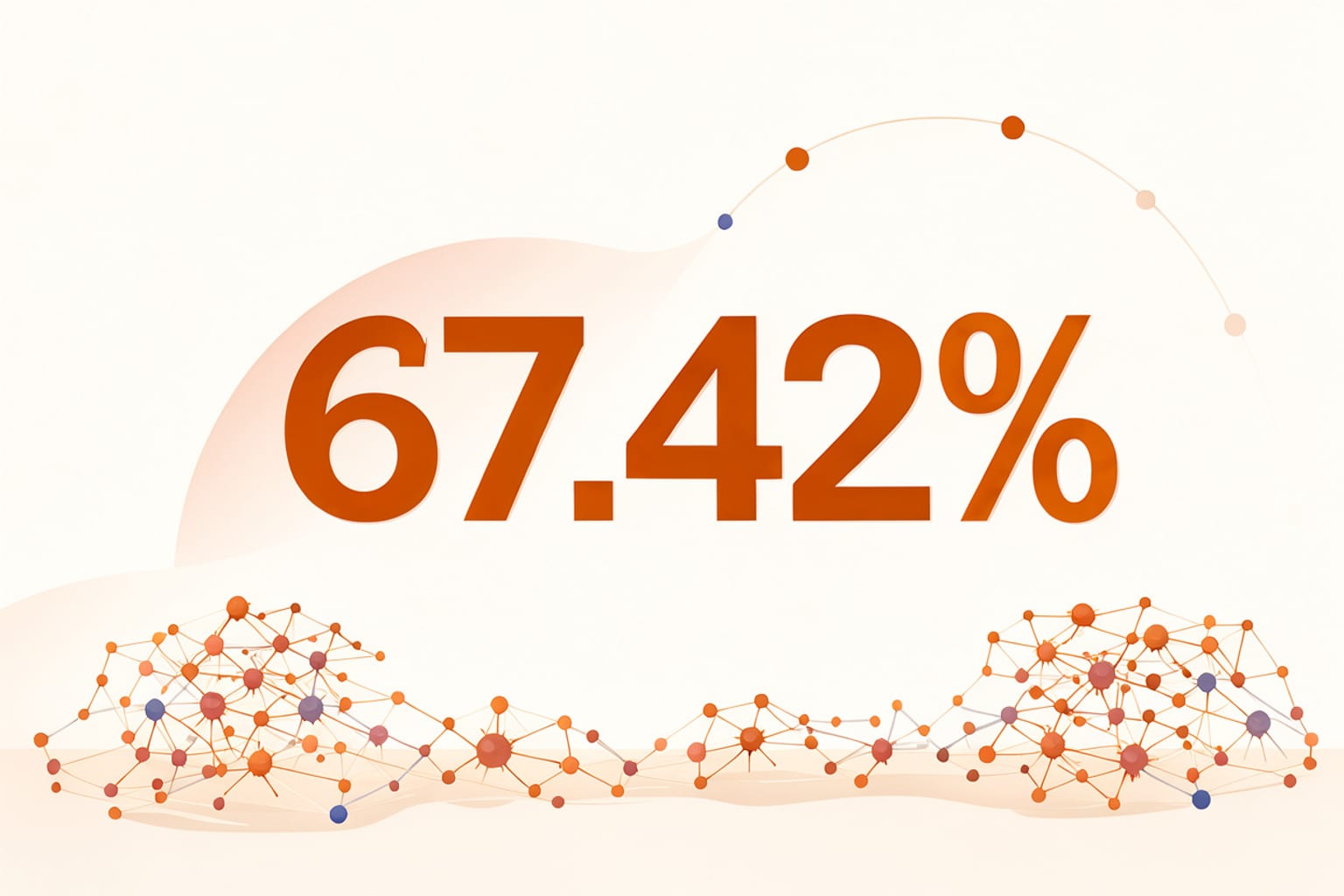
Adding a world model to its existing model raised its self-assessed RoboMME success rate from 60.83% to 67.42%.
67.42%Self-assessed RoboMME success rate, up from 60.83% for the previous model (company self-assessment)

AI agents create over 20,000 TDSQL-C database instances a day, up more than 80-fold in a year.
More than 80xGrowth in daily AI-agent database creations over one year, per Tencent Cloud

SenseTime released SenseNova-Loop-9B-Preview under Apache 2.0 on October 30, with weights on Hugging Face.
9 billionParameters; company says this matches models of about 27 billion

MutexaGPT takes plain-English requests and turns them into physics-based designs for enzyme mutations.

In an internal group chat, while the team was still discussing a fix, the Super-agent had already reproduced the issue in the background and submitted a GitHub pull request for review.
15.7 minutesp95 task completion time, versus 29.5 minutes for a traditional single-session approach; simulated experiment, not a real project

The model rebuilds a real room from one to 12 photos, then lets robots act inside it.

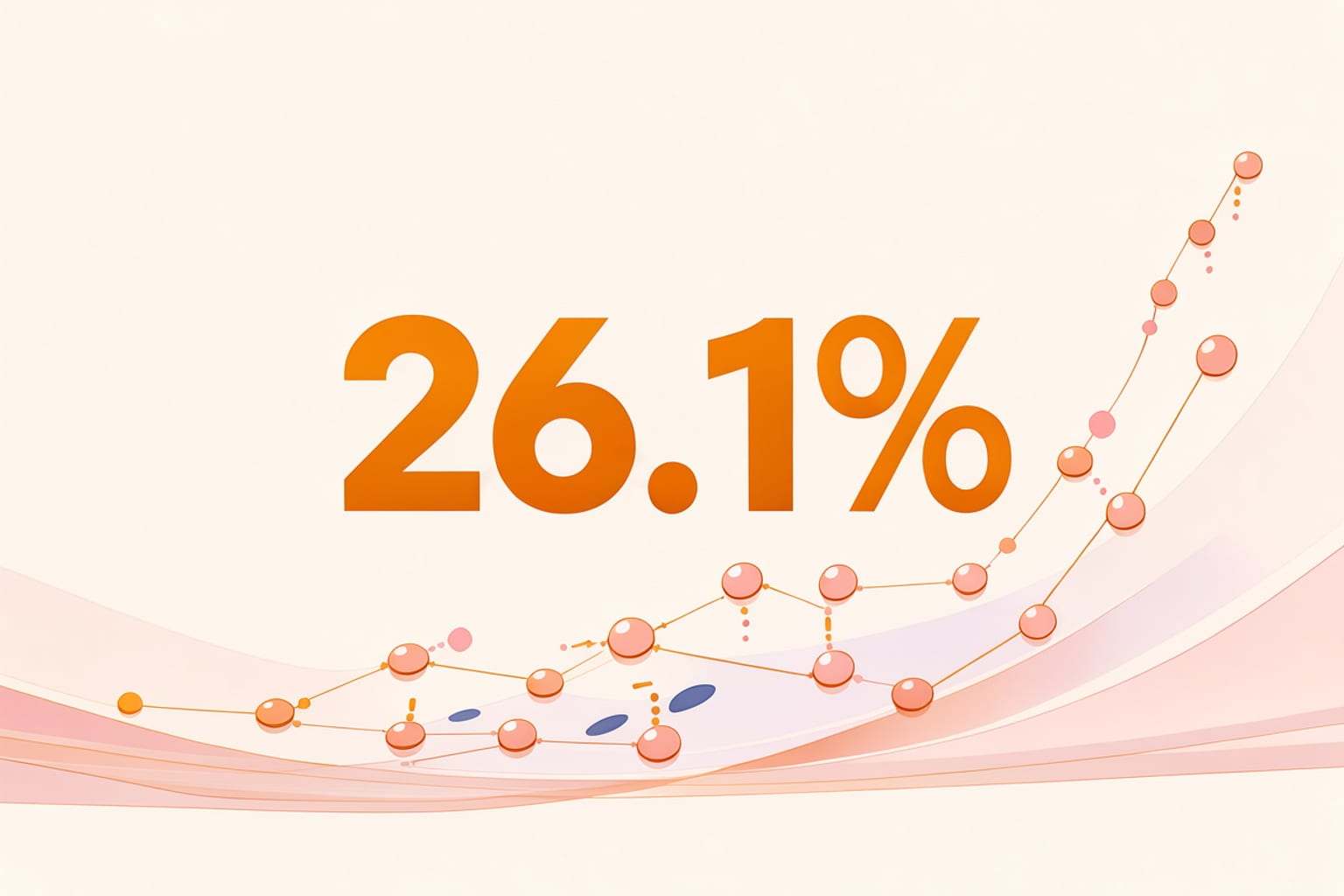
HarnessPro lets an AI agent rewrite the framework that sets its prompts, tools and budgets.
26.1%lower average cost per task than the earlier RHO method, in the team's tests

Chinese AI labs now point AI agents at the engineering around their models, not at the model weights themselves.
two weeksfor an AI agent to build GLM-5.3-Flash's serving stack on about 100,000 accelerators (Zhipu)

Anthropic had Claude generate thousands of training datasets to find ways to make other AI models evade oversight.