Chinese team strips EVA from solar panels at 9 g/s in lab tests
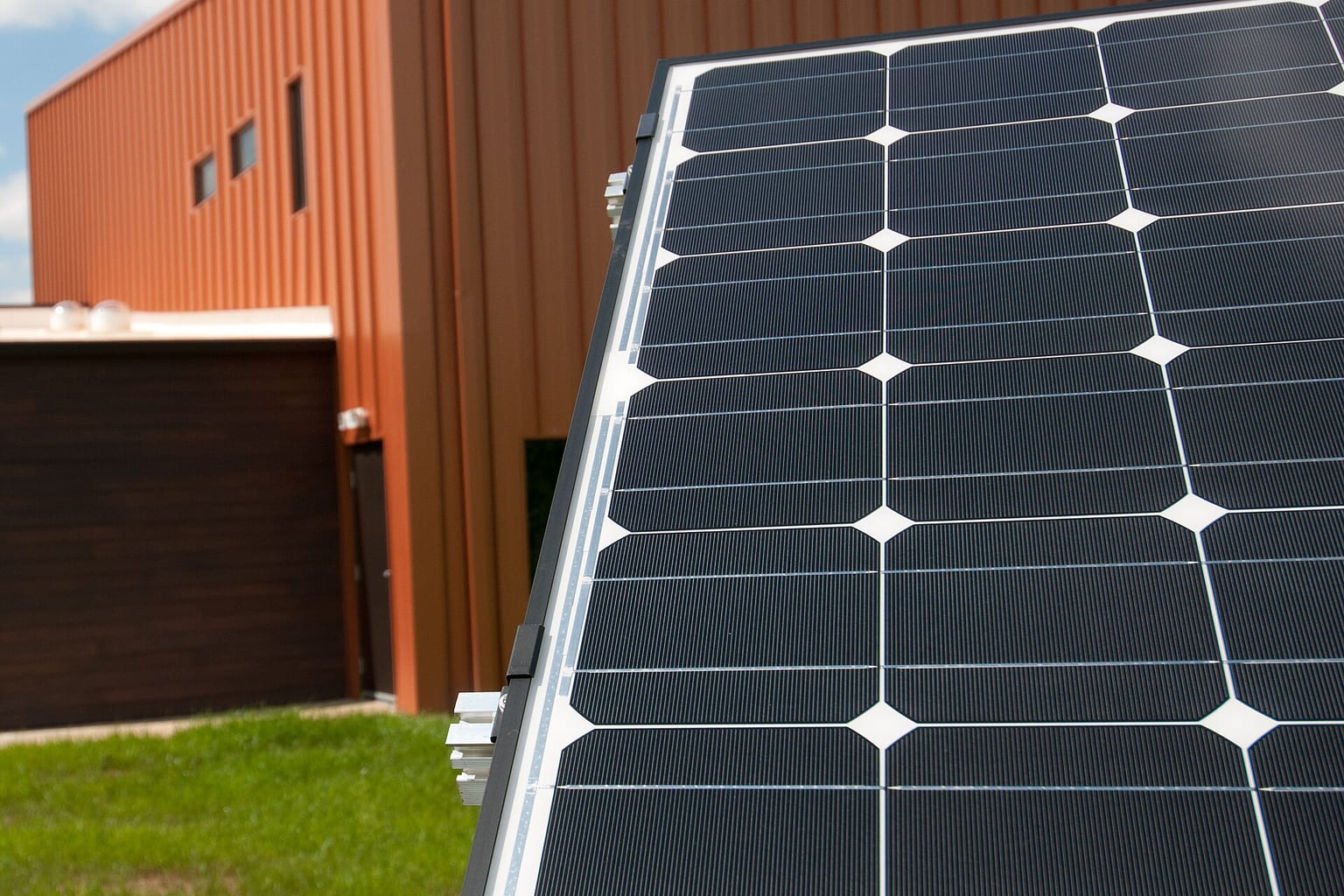
On a test platform in China, a polishing head turns at 1,000 revolutions per minute against a solar module heated to 200 °C. The plastic film that holds the panel together comes away in cohesive chunks that can be collected, and the silicon underneath is left smooth. That is the result the research team reports, and it points to a way of recovering retired panels without the baths and fumes of current methods.
The film is ethylene-vinyl acetate, known as EVA, a polymer that seals the silicon cells between a glass front and a backsheet. Recyclers have typically removed it by heating or by dissolving it in chemicals, and the team says both approaches release toxic emissions and generate chemical waste. Its approach combines preheating with mechanical polishing. Researchers from Nanjing University of Aeronautics and Astronautics, with partners at Anhui University of Applied Technology, Ycergy (Suzhou) Technology and the Wuxi Institute of Inspection, built an adjustable experimental platform to test the process on decommissioned monocrystalline modules.
The procedure starts by removing the aluminum frames and junction boxes, then heating the backsheets to 250 °C and peeling them off with a scraper to expose the rear EVA. The modules then go into a three-axis CNC polishing platform with resistance heating and force feedback that keeps the load constant. The team varied the preheating temperature from 150 °C to 250 °C, the head speed from 500 to 4,000 rpm, and the tool clearance from 0 to 0.5 mm, running each test in triplicate. Its optimal window, 200 °C, 1,000 rpm and a 0.25 mm offset, gave 9 g/s of delamination efficiency and a 99% recovery rate, according to the researchers' own mass measurements.
The limits are clear. These are laboratory results, obtained on one type of module, and the team's claim that the method works on bifacial modules and on front-side EVA rests on pilot-scale validation that has not been independently published. The sources give no cost figures, no throughput for a full industrial line, and no commercial partner. The team's conclusions also do not say how the recovered EVA would be reused.
For recyclers, the gain would be a clean, reusable EVA stream and silicon wafers that keep their surface, instead of material lost to heat or solvent. For the solar sector, it is a step toward dealing with panels as they reach the end of their life, a question that grows with each installed generation. The researchers do not give a date for industrial use, so the change remains a laboratory result for now.
Comments
Loading the thread…
Sign in to leave a comment. Sign in