Computer model maps barley enzyme that controls grain dormancy
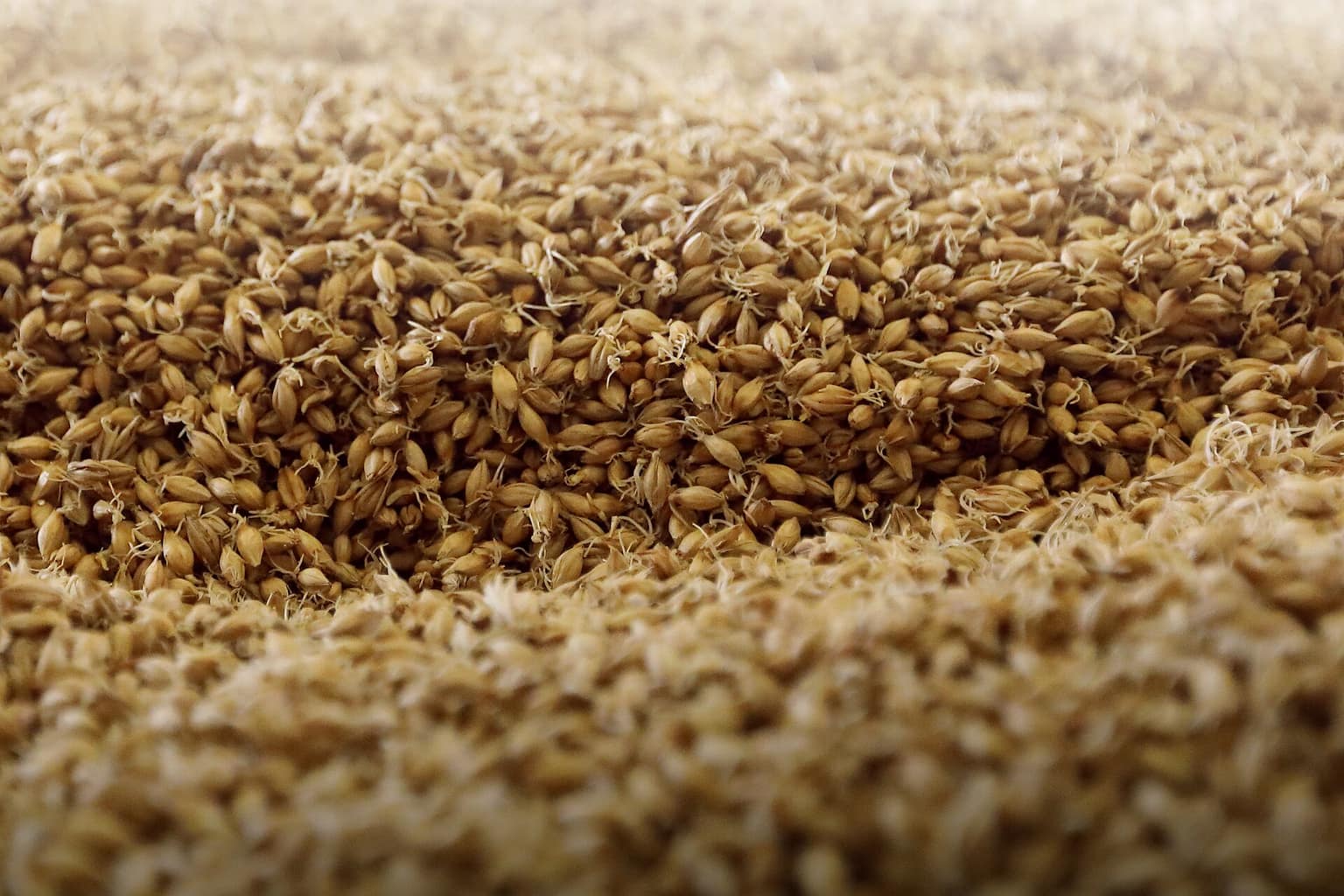
A barley grain is built to wait. Dormant seeds refuse to germinate even when conditions look favorable, and in cereals that refusal protects the harvest: grain that sprouts on the plant before it is cut loses quality and yield. At Adelaide University, computational biophysicist Maria Hrmova and her colleagues have now built a three-dimensional model of the protein partnership that helps decide when that wait ends.
The two partners are MAP3K and MAP2K kinases, part of a family of enzymes called the MAPK cascade. These enzymes act as molecular messengers, relaying environmental and regulatory signals through the cell and ultimately switching genes on or off as the grain moves from dormancy to germination. Because the interaction between the two kinases is transient, Hrmova describes building the complex as both challenging and fascinating. The team combined molecular docking, molecular dynamics simulations, evolutionary biology and AI-based protein modeling. The result defines the geometry of the ATP-binding pocket at the point where the two proteins meet, a site that plays a critical role in their function.
The model builds on earlier work. A 2026 paper in the International Journal of Molecular Sciences established key genetic and structural foundations for the process, and this study turns to the complex itself. Seed World, which covered that earlier paper, credits it with clarifying how MKK3 activates downstream MAPK signaling. The evolutionary data point in one direction: across 76 wild and domesticated barley lines, the MAP3K gene is highly conserved. Co-author Geoff Fincher reads that as a sign the enzyme plays a central and possibly indispensable role. The paper also links higher activity of the MKK3 isoenzyme to less dormancy, and to greater risk of yield losses from preharvest sprouting.
The model has not been checked in a laboratory. Its summary notes that it requires experimental validation, and the paper's authors describe it as a foundation for further studies rather than a finished result. Breeders are the first group the team names: Hrmova says understanding how dormancy is regulated could let them optimize its timing while avoiding preharvest sprouting. Maltsters, brewers and distillers are also cited as potential beneficiaries. No timeline is given, and no breeding program has been announced.
What happens next is laboratory work. The team plans to use X-ray crystallography and cryogenic electron microscopy to define these MAPK enzyme complexes at atomic-level resolution, which would test the computed shape against measured structure.
Sources — read the originals(Paris time)
Pages consulted while writing
Read next
Comments
Loading the thread…
Sign in to leave a comment. Sign in