Cyborg Cockroach Injections Hit 72% Success on Simulated Skin
In a building collapsed by an earthquake, a person is trapped. A cockroach makes its way through a gap that rescue teams cannot enter. On its back sits a small injection mechanism that delivers a drug. A paper published by Australian researchers in the journal Advanced Science brings this scene closer to reality. The “cyborg cockroach,” named “Paraborg,” remotely injects drugs into disaster victims.
Searching under rubble remains extremely difficult. Conventional drones and legged robots often cannot squeeze into narrow gaps. Cyborg insects, which use the physical abilities of living insects, have therefore attracted attention. However, research so far has focused mainly on autonomous control and camera-based search. This study goes a step further, aiming to have the insects also deliver life-saving medical treatment, such as drugs, to victims once they are found.
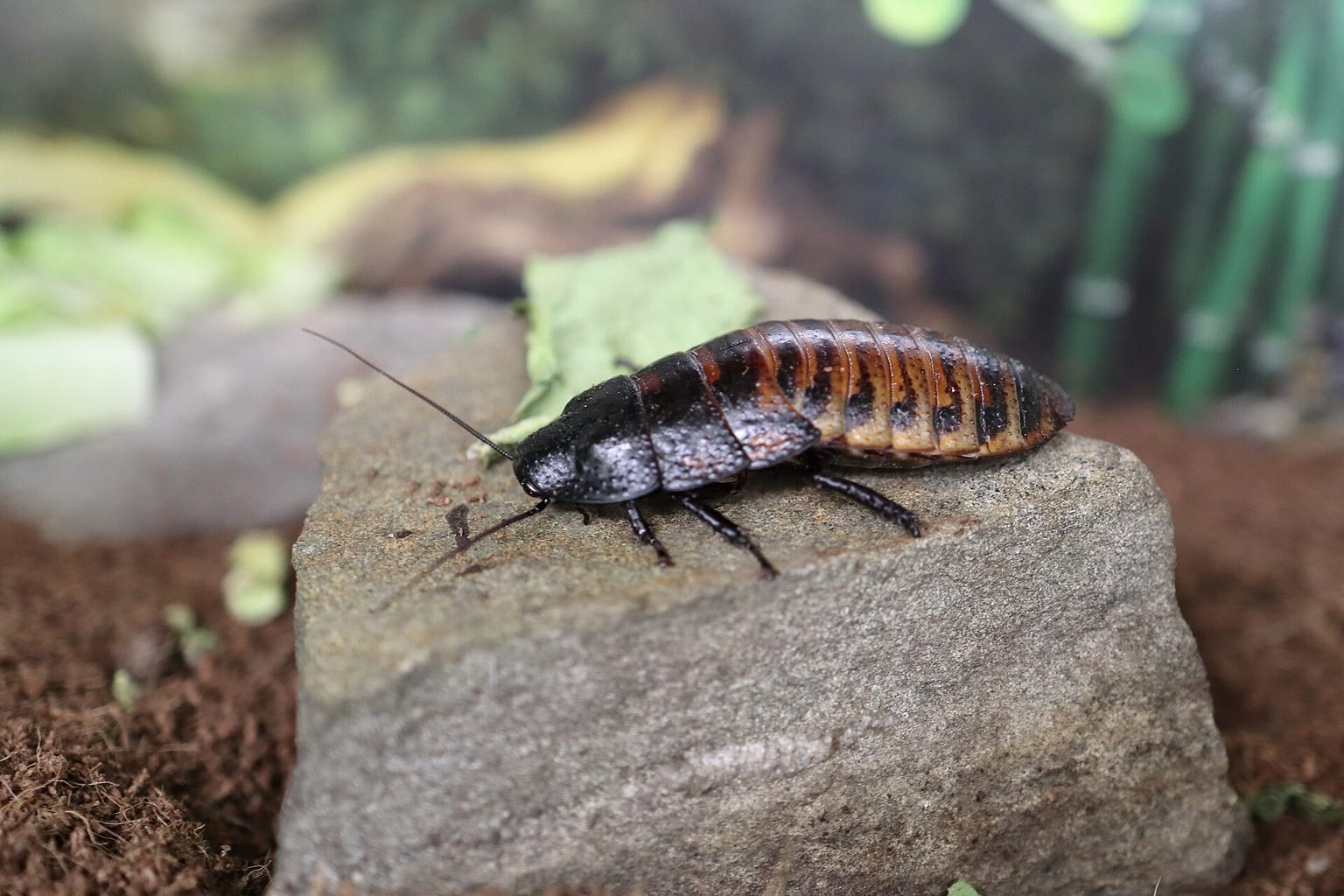
The team used a large armoured mole cockroach as the base. Electrical stimulation applied to its antennae and cerci allows a human operator to remotely control walking and turning. The operator can also hold the cockroach still at the optimal position for drug administration. The injection mechanism works in two stages. First, a remote electrical signal heats a nichrome wire, which burns through a fishing line. A compressed spring is then released, firing the syringe at the target. At the moment of launch, an internal separation membrane ruptures, and citric acid and potassium bicarbonate mix. The carbon dioxide generated pressurises the rubber stopper, pushing the drug through the needle automatically.
The system relies on multiple insects working together. A scout cockroach carrying a camera locates a victim first. Using the real-time video, a human operator then guides an injector cockroach to the target. In the experiments, the researchers attempted the full sequence of 25 times, from passing checkpoints to reaching the target and injecting the drug. There were 18 successes, a success rate of 72%. Of those 18 successes, 12 involved firing with the cockroach's head touching the target. The five failures were shots fired from roughly 15 to 25 cm away, where the syringe did not penetrate. The remaining two failures occurred when the cockroach made a sharp turn during firing, and the syringe hit a wall.
The goal of the research is to deliver drugs directly to victims that rescue teams cannot yet approach. However, according to the reported information, no timeline for practical use has been given. All tests were conducted on silicone mimicking human skin, and no results involving humans have been published. The 72% figure can be read as an indication of how far the technology has progressed toward reliable injections in narrow gaps. What will be shown next cannot be determined from the article on the paper's publication.
Comments
Loading the thread…
Sign in to leave a comment. Sign in