In the lab, robot-guided coating lifts perovskite cell to 24.4%
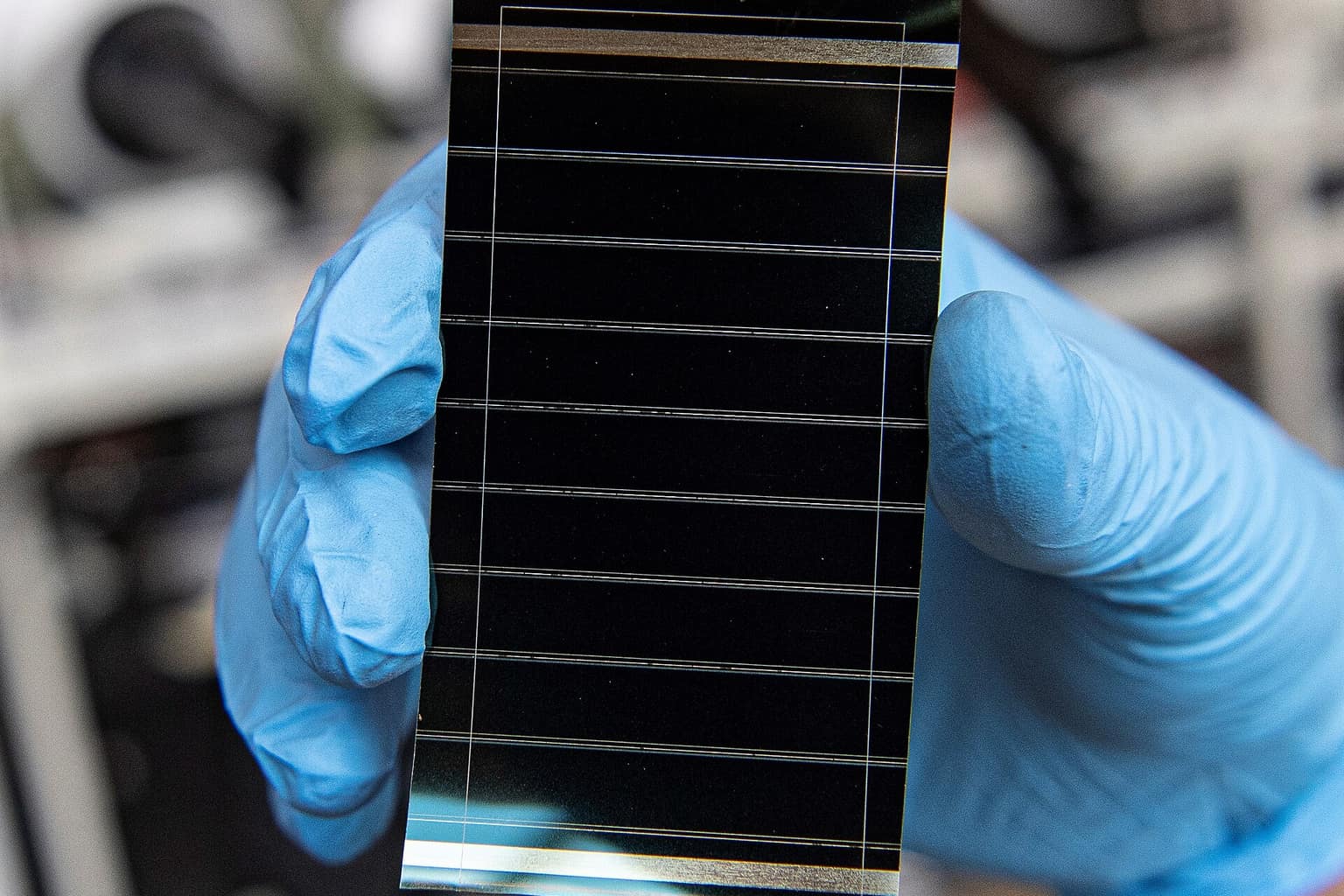
A coating that dries in a fraction of a second decides how good a solar cell will be. In the laboratory at the University of Osaka, a robot now deposits that coating while cameras and sensors record what happens to it. The film changes color, and tiny droplets of antisolvent land and spread, all in the space of a few milliseconds.
Perovskite, the light-absorbing material used in these cells, forms from a liquid solution that dries and crystallizes into a solid film. Small swings in temperature, humidity and other conditions can change how that film forms, and so change the performance of the cell. Until now, researchers largely adjusted their recipes by trial and error, without seeing the film form. The Osaka platform couples film deposition with optical imaging and environmental measurements, and it captures the process while it unfolds. It records color changes on a subsecond timescale and resolves the motion and impact of antisolvent droplets within just a few milliseconds.
"We want to move beyond trial and error by measuring what happens to the film while it is actually forming," says lead author Ryosuke Kado. Senior author Akinori Saeki adds that automation allows far richer data than manual work would, and that machine learning helps sort the many variables and reveal relationships that are hard to see. The analysis identified an optimal range for droplet behavior. The team used that range to refine the antisolvent coating step and fabricated a lead-based perovskite solar-cell device. Under the optimized conditions, the device reached a power conversion efficiency of 24.4%, which shows that information gathered during film formation can improve an actual cell.
The result rests on laboratory measurements published in ACS Nano, and the device is a single lab cell rather than a production line. The article does not report how the approach would perform at larger sizes or outside the lab.
For researchers, the gain is a method: instead of inferring from the finished film why one batch performed better than another, they can observe the formation step and test which conditions matter. The team is optimistic that the platform will catalyze photovoltaic research and lead to more practical solar cells. No commercial timeline has been announced.
Sources — read the originals(Paris time)
Read next
Comments
Loading the thread…
Sign in to leave a comment. Sign in