Osaka's ground is rising as its groundwater recovers
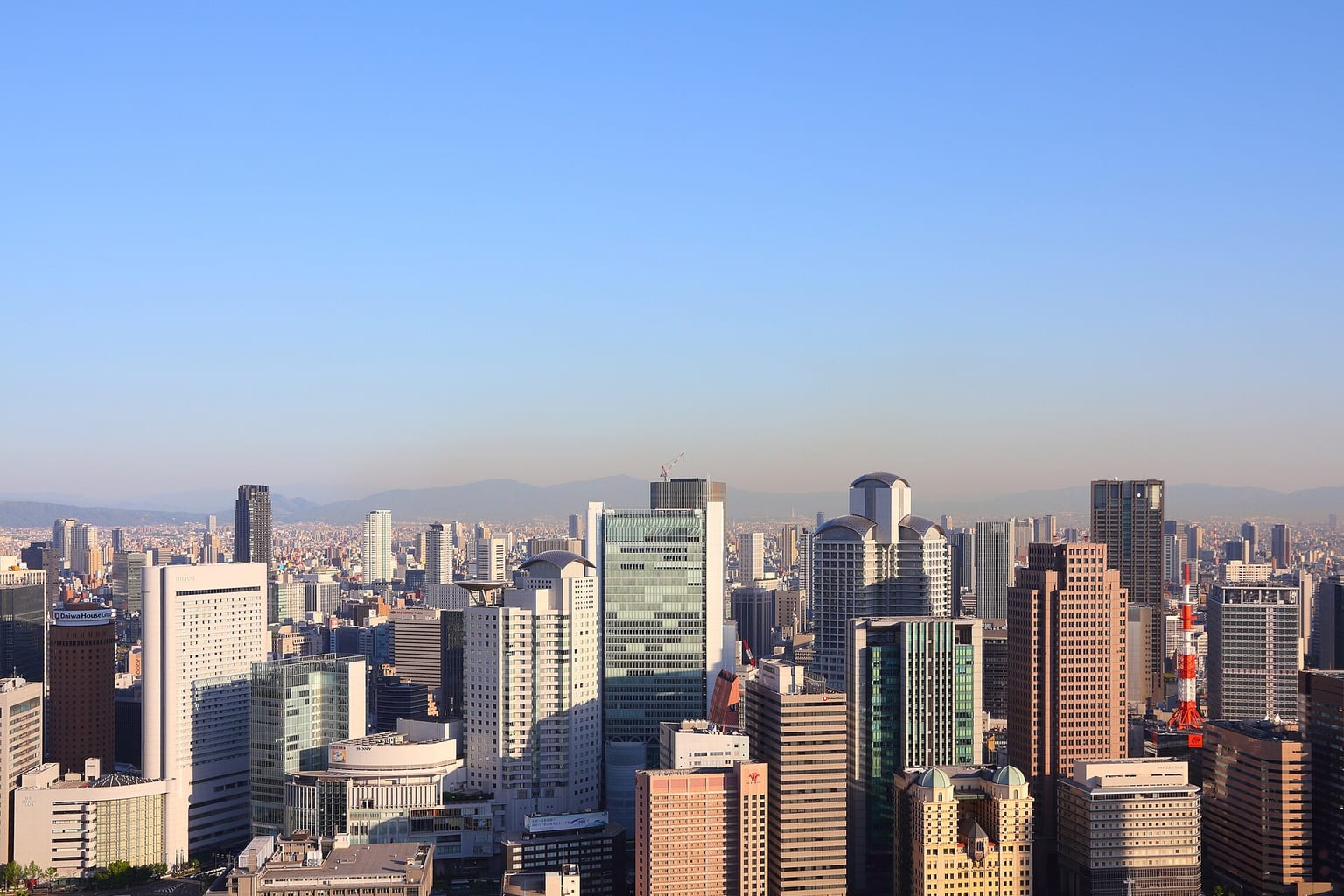
On one side of a fault line in Osaka, groundwater has been rising three times faster than on the other. That single detail is what turned a study of a sinking city into a story about how cities might rise again. Cities built on pumped aquifers are sinking across the world: parts of Jakarta sink more than ten centimetres each year, and in Tianjin, home to 15 million people, 15% of the population could be underwater by 2120 if the sinking continues unchecked.
The mechanism is simple to picture. An aquifer, an underground layer of water-saturated rock, supports the ground above it. Pump it out and the ground sags. Groundwater management is already the standard answer to slow this down, but the open question was what happens when the water returns: does the ground simply rise back evenly, or does it respond in a more complicated way? To answer it, the researchers needed two things: long records of where water accumulated underground, and millimetre-scale measurements of the surface.
Osaka offered a natural test. Between the 1920s and 1960s, pumping lowered water levels by up to 30 metres and sank parts of the city by more than two metres. Strict regulations from the early 1960s have since let groundwater recover. The team used data from 44 monitoring wells, some reaching 500 metres below the surface and stretching back to 1985, and measured ground movement with interferometric synthetic aperture radar, or InSAR, a method that compares repeated satellite radar images tied to precise satellite positioning. Across greater Osaka, home to about 15 million people, the ground averaged about four millimetres a year of uplift, and reached 12 millimetres a year in some places. Groundwater rose at rates of up to a metre a year.
The map was patchy, though. Within a few hundred metres, uplift could change sharply, and those changes lined up in narrow corridors that matched known faults. The researchers describe faults as underground dams: they block water flowing sideways through the aquifer. Water backs up on the upstream side, so recovery and uplift are faster there, while the downstream side lags. That is why the land does not rise like a balloon reinflating evenly.
For coastal cities adapting to rising seas, the implication is practical. Where pumping has caused subsidence, cutting extraction and letting aquifers refill could reduce the downward movement of the land and, in some places, potentially reverse it. The study does not say how quickly this would happen in any given city, and its evidence comes from Osaka alone. But as seas climb, keeping the ground from sinking is becoming part of the adaptation toolkit, and planners in cities like Jakarta, Tianjin, Christchurch and Wellington now have a reason to look at their aquifers as carefully as at their sea walls.
Comments
Loading the thread…
Sign in to leave a comment. Sign in