Volkswagen ID.3 Neo: 22 minutes for 10-80% in test
It takes just 22 minutes for the Volkswagen ID.3 Neo 58 kWh to go from 10% to 80% charge at a fast charger, according to measurements by the magazine Automobile Propre. The figure may seem ordinary, but it is not for a car whose specification sheet, a few years ago, promised a much weaker result. To understand what has changed, you need to look at the curve, not just the duration.
Launched in 2019, the ID.3 is nearing the end of its career. Yet it receives a third facelift, the most significant of its life, with a new powertrain. On the 58 kWh version, a 140 kW (190 hp) electric motor with 350 Nm of torque, codenamed APP350, comes with an LFP (lithium iron phosphate) battery. The former version, with NMC chemistry, promised 120 kW for a 10-80% charge in 32 minutes, then 165 kW and 24 minutes after an update. The new one is advertised at 105 kW for 26 minutes: on paper, a slight step back.
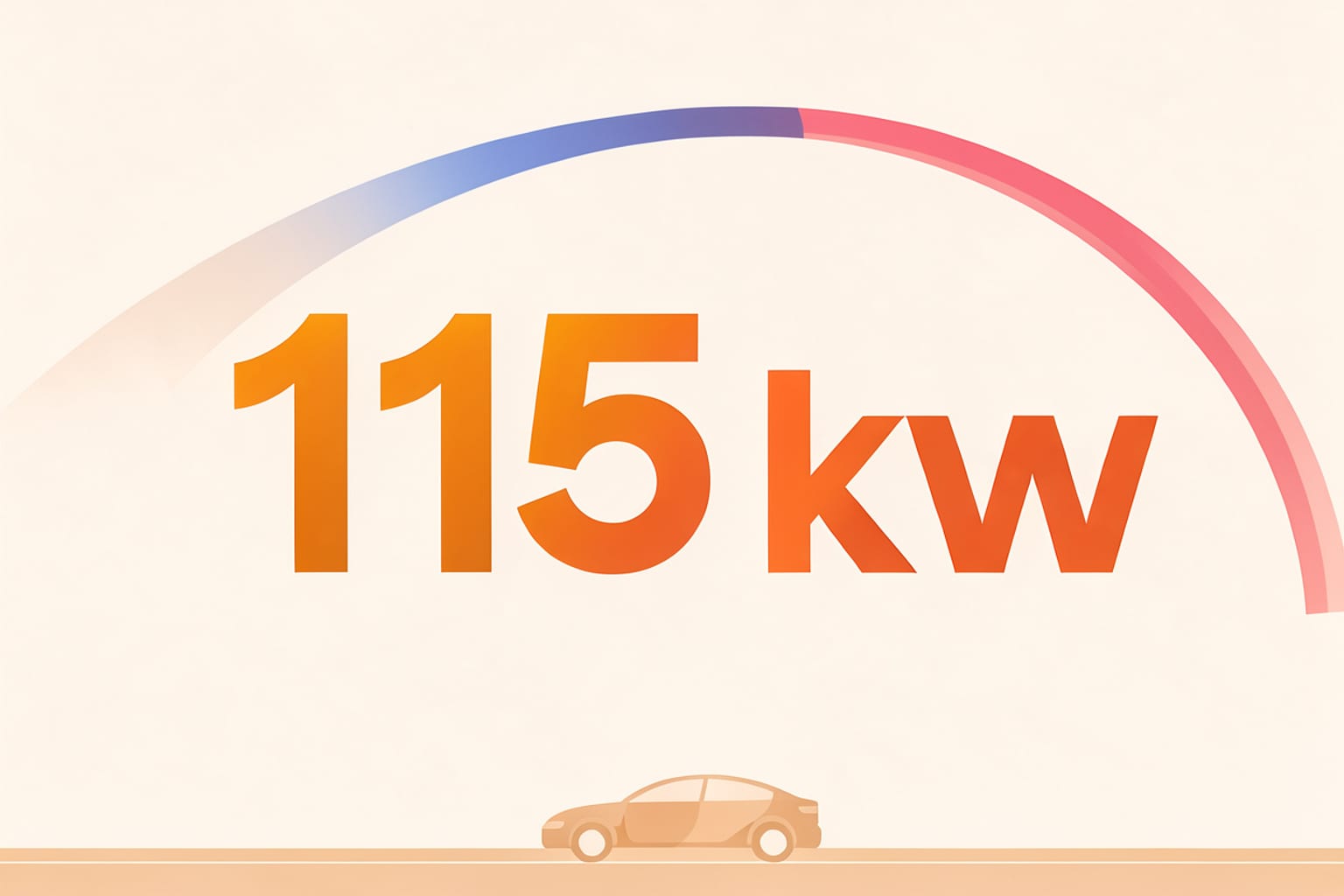
The test tells a different story. The measured peak reaches 127 kW, and above all it is held up to nearly 55% charge. It is this sustained performance that makes the difference: average power at the charger rises to 115 kW, compared with 76 kW for the first version. In the 60 kWh category, the magazine finds none averaging more than 95 kW, with the exception of the Mercedes CLA 200, at 151 kW. The battery also performs well at temperature extremes: starting at 41°C, the car accepts full power. At 18°C, it exceeds 120 kW and then collapses, and the 10-80% charge takes just over 25 minutes, at an average of 103 kW. Cold weather, then, remains the point to verify.
For whom, concretely? For a driver who covers long distances, the gain shows up in minutes spent stopped. On a 500 km motorway route, the magazine records a total travel time of 4h 53min, including 25 minutes of stops, where the trip computer had predicted 42. The car regains 245 km of range in 30 minutes. On cost, charging at home on AC power, at €0.20/kWh, works out to €3.30/100 km in mixed driving, compared with €9.50/100 km at a fast charger at €0.60/kWh. The magazine does not say when these conditions will apply to all buyers: it only measures this one vehicle, on one given day.
Comments
Loading the thread…
Sign in to leave a comment. Sign in