Chery Unveils CheryMind Physical AI Model Aimed at Smart Tech Firms
On October 20, 2026, at the Chery Global Innovation Conference, chairman Yin Tongyue again described the company as a high-tech innovation firm wearing a carmaker's disguise. The exhibits did not look like those of a traditional automaker: an eVTOL capable of carrying people through the air, an electric tractor working autonomously in fields, humanoid robots entering homes and hospitals, and a solar-powered car that can extract water from the air. At the conference, Chery officially unveiled its "Yaoguang 2035" strategy, which aims to evolve from a traditional carmaker into a global smart technology company driven by AI.
The core of this strategy is a model called CheryMind. Chery positions it as a vertical foundation model for physical AI. Unlike general-purpose large language models, which mainly learn from internet text, it must understand vehicle dynamics, mechanical structures and unexpected situations in the real world, so its training data comes from physical environments: 700TB of enterprise knowledge, 200PB of engineering data, 25 million segments of coach-level driving data and 5 million segments of robot motion-capture data. Internally, it is already connected to more than 400 enterprise systems, covering more than 200 business scenarios from CAD design and quality management to manufacturing, and is used by more than 60,000 employees per day. From this central model, Chery is deriving vertical models for smart cockpits, driver assistance, flight control, robots and agricultural machinery.
In intelligent driving, this approach is reflected in the CHERY AWE all-dimensional world engine, which includes three models for scene understanding, semantic reasoning and behavioral decision-making. Among them, the scene-building model has created more than 700,000 scenarios, including 300,000 high-risk scenarios and 20,000 extreme scenarios, used to train systems to handle rare real-world situations with serious consequences. On this basis, Chery has launched a native factory-fitted Robotaxi (driverless taxi) for global markets and set a target of 100,000 vehicles in operation worldwide by 2030. "Native factory-fitted" means that autonomous driving requirements are considered from the vehicle design stage. Chery also acknowledges that moving from demonstration to large-scale operation will still require clearing hurdles in regulation, safety, cost and operating efficiency.
Energy and aircraft are two other lines. Chery showcased an energy system combining V2G (vehicle-to-grid, which allows electric vehicles to feed power back to the grid at suitable times), its Xunlong flash-charging system and wireless charging. The Xunlong flash-charging system reaches 1.44MW in power, and according to official technical specifications, five minutes of charging adds 500 km of range. Based on its own calculations, Chery says that by exploiting peak-valley electricity price differences, users participating in vehicle-to-grid schemes could earn more than 3,000 yuan per year, and the company plans to build 20,000 V2G stations worldwide by 2029. These figures are Chery's estimates, and actual earnings will depend on charging and discharging losses, battery life and electricity pricing mechanisms. Chery also disclosed a technical target of 400Wh/kg for all-solid-state batteries, with a pilot production line planned for 2027. In eVTOLs, the two-seat Lingxiao Q212 has a design cruising speed of 120 km/h and endurance of over 60 minutes at full load, while the five-seat Lingxiao J506 targets a top speed of 350 km/h and a range of more than 1,000 km.
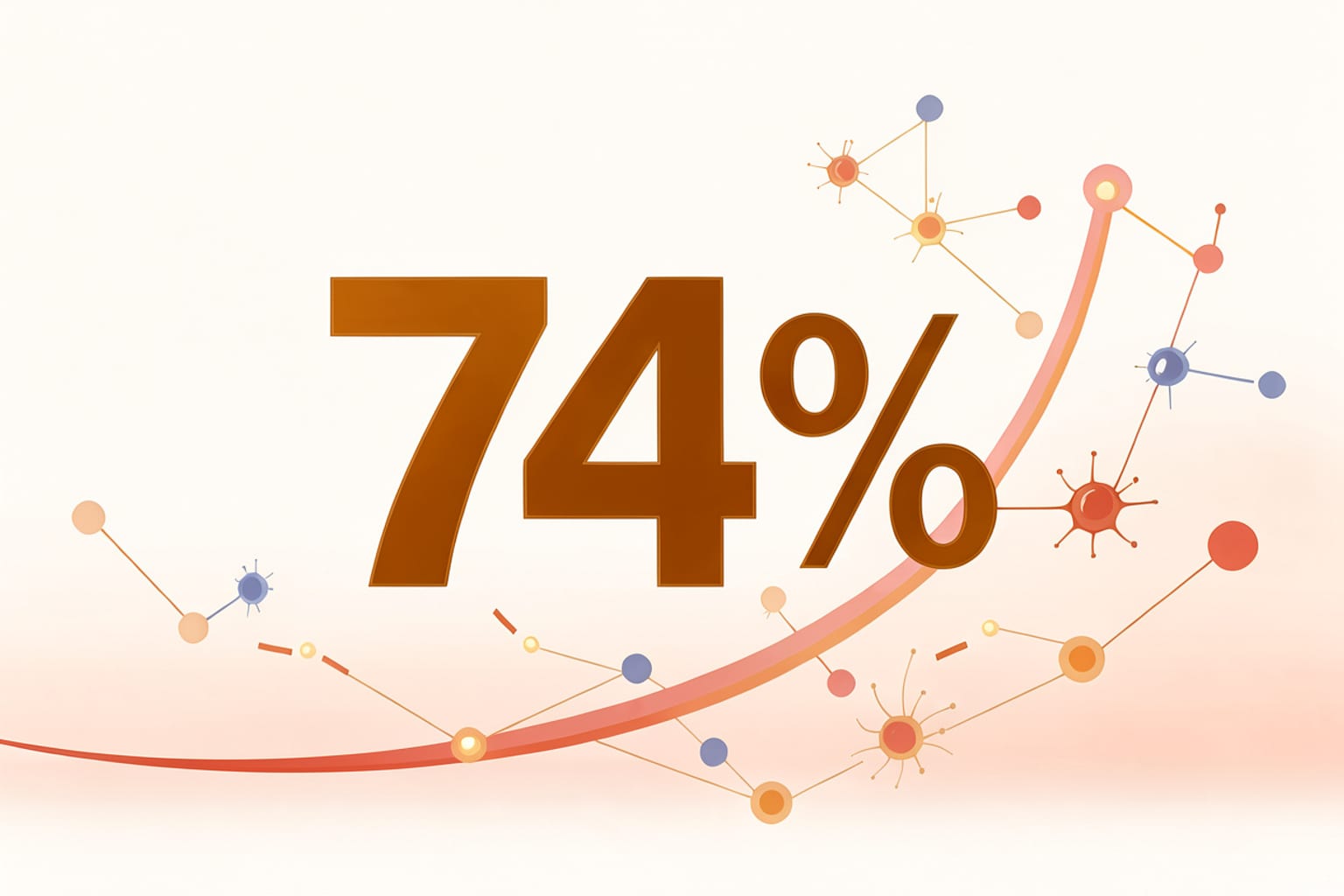
For ordinary users, the most noticeable change may be on their energy bills, but that will have to wait until V2G stations are widely deployed. For carmakers and suppliers, the real variable is whether Chery can apply the electrification, intelligence and supply-chain capabilities it has built in the auto industry to robots and farm machinery. The farm machinery test data Chery provided shows that, on potato farms, the relevant products reduce energy costs by 74% and maintenance costs by 59%. In large-scale unmanned field operations in Northeast China's farmland, one person can manage multiple machines, and daily area worked per person has risen from 150 mu to 800 mu. Its robotics business, Mojia, has reached 60 countries, with more than 2,000 units exported to date. These are all figures published by Chery and have not been reviewed by independent bodies, but they show that the new businesses already have real operational scale.
Comments
Loading the thread…
Sign in to leave a comment. Sign in