New-Energy Cars Hit 67% of China Sales; Fuel Cars Fall Below a Third
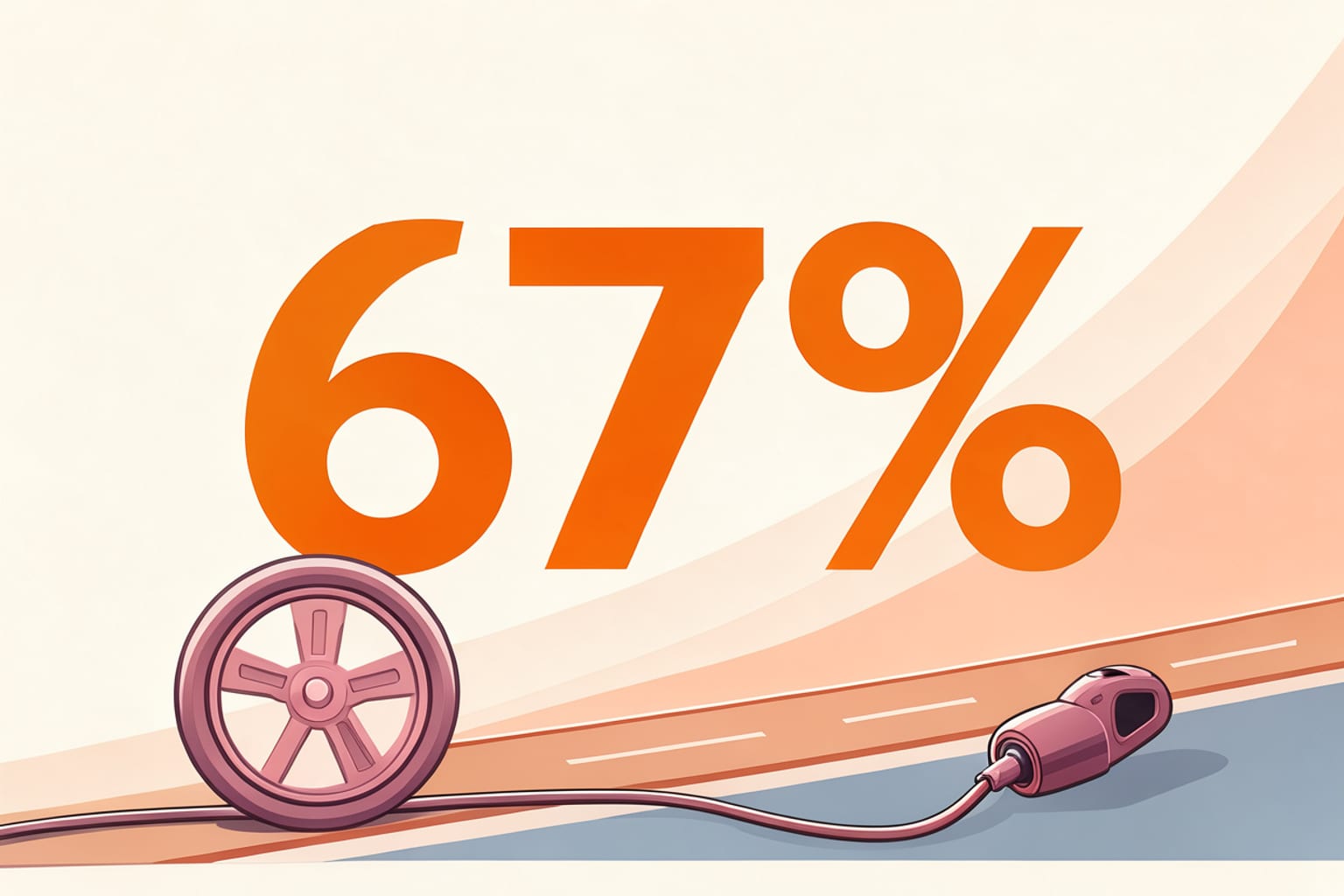
Two out of every three passenger cars sold now are new energy vehicles. According to the China Passenger Car Association (CPCA), the main statistics body for China's passenger car market, fuel cars fell below one-third of sales in China for the first time in September 2026, while the overall penetration rate of new energy vehicles climbed to 67%, a record high. A decade ago, the figure was still below 5%.
The pace of the shift has outpaced the industry's earlier expectations. Tesla CEO Elon Musk reposted a post by Nicolas Fulghum, an analyst at energy data firm Ember, and commented: “China's dependence on oil is falling rapidly.” Fulghum's post also showed that battery-electric vehicles reached nearly half of China's market in September, at 47.3%.
Three forces are driving the change: products, policy and consumers. On the product side, new energy models priced around 100,000 yuan can now deliver more than 400 km of range, and models priced around 150,000 yuan commonly come with advanced driver-assistance systems, so fuel cars' advantages in equipment and running costs at the same price point are disappearing. On the policy side, the purchase tax exemption for new energy vehicles (a tax that buyers are exempt from paying when they buy a car) has been extended through the end of 2027, and local license plate policies for new energy vehicles continue to ease, while some cities have not relaxed purchase restrictions and traffic controls on fuel cars. On the consumer side, buyers born in the 1990s and 2000s place more weight on smart features, and data from several brands' authorized dealerships (4S stores) show that far more customers ask about intelligent driving and in-car systems than about engine specifications.
The numbers have another side. Measured by production, new energy vehicles accounted for 53% of output from January to September 2026, compared with the 67% share of sales, and the two sets of figures cannot be directly compared. Total car production over the same period was 23.37 million units, down 4% year on year, with fuel car output down 17%. Joint-venture brands have been hit hardest: fuel car sales at Volkswagen, Toyota, Honda and others generally fell by more than 20% year on year, and some brands' capacity utilization in China has dropped below 50. Among domestic brands, companies that moved early, such as BYD, Geely and Chery, have continued to gain share, while slower transformers face squeezed room to survive.
For ordinary car buyers, this means that within the same budget, a new energy vehicle is now the more common choice. For traditional carmakers, transformation has moved from a matter of choice to a matter of survival. But Cui Dongshu, an official at the CPCA, cautions that fuel cars will not disappear immediately. In long-distance travel, in cold climates and in areas with incomplete charging infrastructure, fuel cars still hold advantages that cannot be replaced, and the pace of new energy penetration growth may gradually slow.
Comments
Loading the thread…
Sign in to leave a comment. Sign in